
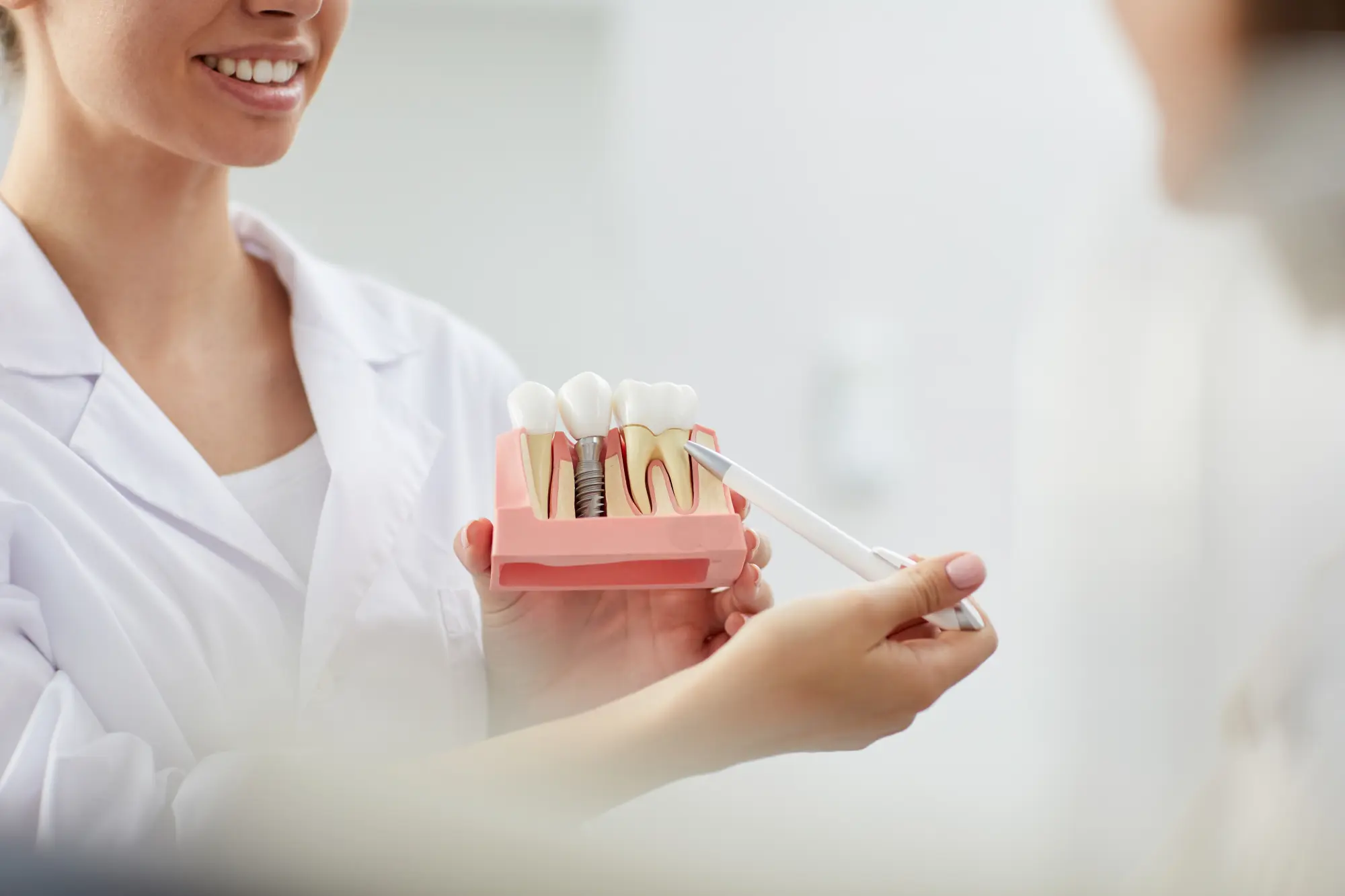
Why Does a Dental Implant Crown Feel Loose, and How Is It Repaired?
A dental implant crown usually feels loose because the screw or cement holding it has loosened, the crown has worn, or the bone and gum tissue around the implant have changed. Most of these problems can be repaired, and the sooner you call, the simpler the fix tends to be.
At Castile Dental Group, we offer the Shelby Township implant crown care you need. Dr. Evan Castile evaluates the crown, the abutment, and the implant itself to find the exact cause before recommending anything. If your crown moves, clicks, or feels different when you bite, call us at (586) 992-9222.
What a Loose Implant Crown Is Telling You
An implant has three parts: the implant post in your jaw, the abutment that connects to it, and the crown you see. A loose feeling can come from any one of them.
A crown that wiggles is not the same as an implant that has failed. In many cases, only the crown or a small internal screw needs attention. That is good news, but it still needs to be checked.
Crown Loose Versus Implant Loose
If the crown moves but the post stays firm in the bone, the problem is usually mechanical. If the entire implant shifts along with the gum and bone, the cause is more likely tied to bone loss or infection, which needs prompt care.
Common Reasons a Dental Implant Crown Feels Loose
Several issues cause looseness. Knowing them helps you describe your symptoms accurately when you call.
A Loose Abutment Screw
A tiny screw holds the abutment to the implant. Chewing forces can slowly loosen it, especially on back teeth. You may notice a slight rocking or a clicking sound when you bite down.
Worn or Failed Dental Cement
Some crowns are cemented onto the abutment instead of screwed on. Over time, the cement can break down and let the crown shift. You may also notice a bad taste or odor if bacteria get underneath.
Teeth Grinding and Bite Problems
Clenching and grinding place heavy, repeated pressure on an implant crown. A bite that is slightly uneven can do the same. Natural teeth have a cushioning ligament, but implants do not, so they take the full force.
Gum Disease Around the Implant
Peri-implantitis is an infection that inflames the gum and can erode the bone supporting the implant. Warning signs include bleeding, swelling, tenderness, and gums pulling back from the crown.
A Cracked Crown or Damaged Component
Porcelain can chip or crack, and abutments can fracture under strain. Either can make the restoration feel unstable or rough against your tongue.
Signs You Should Not Wait
A loose implant crown doesn’t fix itself. Waiting can allow bacteria to collect, damage the screw threads, or harm the underlying gum and bone structure. Call promptly if you notice any of the following:
- Movement or rocking when you chew or press with your tongue
- A clicking sound or a sense that the crown sits differently
- Pain, swelling, or bleeding around the implant
- A bad taste or persistent odor near the crown
- Visible gaps between the crown and gums
- A chipped or cracked crown
If the crown comes off completely, keep it in a clean container and avoid using glue. Household adhesives can damage the parts and make repair harder.
How We Diagnose a Loose Implant Crown in Shelby Township
Our team has cared for families in Shelby Township since the 1970s, and Dr. Castile grew up here. When you come in with a loose crown, we take the time to look carefully and explain what we find in plain language.
Your visit typically includes a gentle check of how the crown moves, a look at the gum tissue, a bite evaluation, and digital X-rays. The images show the bone level around the implant and help us see whether a screw, the cement, or the bone is involved.
How a Loose Dental Implant Crown Is Repaired
Repair options depend on the cause. Dr. Castile presents each option clearly, shares the fees up front, and recommends only what supports your long-term health. Our implant restoration services cover each of the repairs below.
Tightening or Replacing the Screw
If the abutment screw has loosened, the crown is removed, the parts are cleaned, and a new or retightened screw is placed to the proper torque. This is often a straightforward visit.
Recementing or Replacing the Crown
When cement has failed, the crown can often be cleaned and reattached. If it is worn, cracked, or no longer fits well, a new crown will be made to match your bite and neighboring teeth.
Replacing a Damaged Abutment
A cracked, worn, or poorly-fitted abutment is swapped for a new one, followed by a new crown if needed. This restores a stable connection to the implant.
Treating Gum Infection and Bone Concerns
If infection is present, we focus on cleaning the area and controlling inflammation before restoring the crown. Treatment is planned around what we see, and we will talk through all of your gum care options with you.
Protecting Your Implant From Grinding
If clenching or grinding is a factor, a custom nightguard can reduce the force on your implant and help the repair last.
What to Expect After Your Repair
Most patients feel the difference right away, with the crown sitting firmly again. Mild tenderness for a day or two can happen, and we will explain how to care for the area at home. When a replacement is needed, we offer custom dental crowns matched to your bite.
After procedures, Dr. Castile calls patients from his cell phone to see how they are feeling. It is a small gesture, but it reflects how we practice dentistry: attentive, unhurried, and personal.
How to Keep Your Implant Crown Secure
Good habits protect your investment and reduce the chance of another loose crown.
- Brush twice daily and clean around the implant with floss or an interdental brush
- Keep regular checkups and cleanings so we can spot early changes
- Avoid chewing ice, hard candy, or opening packages with your teeth
- Wear a nightguard if you grind your teeth
- Do not smoke, since it raises the risk of implant complications
Regular visits for preventive dentistry make it easier to catch small changes early.
Call Castile Dental Group About Your Loose Crown
You should not have to wonder whether a loose implant crown is serious. Dr. Evan Castile, a University of Detroit Mercy graduate and a yearly Hour Detroit Top Dentist since taking ownership, will examine it and walk you through every option.
We accept insurance, and patients of record can reach Dr. Castile through our after-hours emergency line if a problem cannot wait. To schedule your visit, call Castile Dental Group at (586) 992-9222. You are family here, and we will take care of you.
Related Posts
Do Teeth Decay or Rot Under Porcelain Veneers? What You Need to Know
Why Does a Dental Implant Crown Feel Loose, and How Is It Repaired?
How Do You Clean Under a Dental Bridge to Prevent Infection?